Start with what you have
CAD, PDF, catalog code, photo, or a short cutting problem can begin the review.
Seco Tools is organized around a simple promise: make tooling conversations easier to start, easier to compare, and easier to pass from engineering to procurement.

Many tooling requests begin with incomplete information. A buyer may have an old insert code, a machine operator may know the finish problem, and an engineer may have a drawing but no time to translate it into a clean purchasing file. Seco Tools treats that messy beginning as normal. The first job is to capture context: machine model, spindle interface, material, operation, tolerance, finish expectation, coolant, expected quantity, and the date that matters to the program.
The team then turns those details into a quote path that can be understood by more than one department. Engineering sees the assumptions behind the recommended tool or holder. Purchasing sees what is included, what is excluded, and what still needs buyer approval. Quality sees whether inspection notes, FAI references, material trace comments, or other documentation should be attached to the order. That structure keeps small uncertainties from becoming late surprises.
Seco Tools uses the 8.4M+ line-item reference pool, 17,386+ active tool and part contexts, and 31 common material or finish routes as planning aids. Those counts help organize choices, but they are not universal-fit promises. Final suitability depends on the actual machine, toolpath, fixture, material batch, coolant, operator setup, and inspection method.
CAD, PDF, catalog code, photo, or a short cutting problem can begin the review.
Unclear machine or material details are written down rather than hidden in the quote.
Recommendations, alternates, lead-time notes, and documentation options are grouped cleanly.
Good tooling advice starts with asking enough plain questions to avoid costly assumptions.
The team avoids claims such as "any material" or "perfect finish" and focuses on known boundaries.
Accepted quote context can be saved as a reference so repeat orders need less rediscovery.
Reviews operation type, material, holder reach, and insert choice.

Turns the technical review into line items, alternates, and purchasing notes.
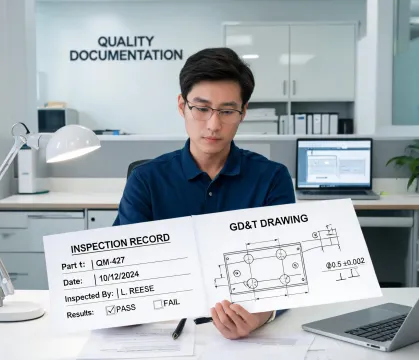
Prepares inspection, trace, and buyer file notes when the program needs evidence.
Send one line item or one machining problem. The first response will show the next practical questions instead of pretending every detail is already known.